
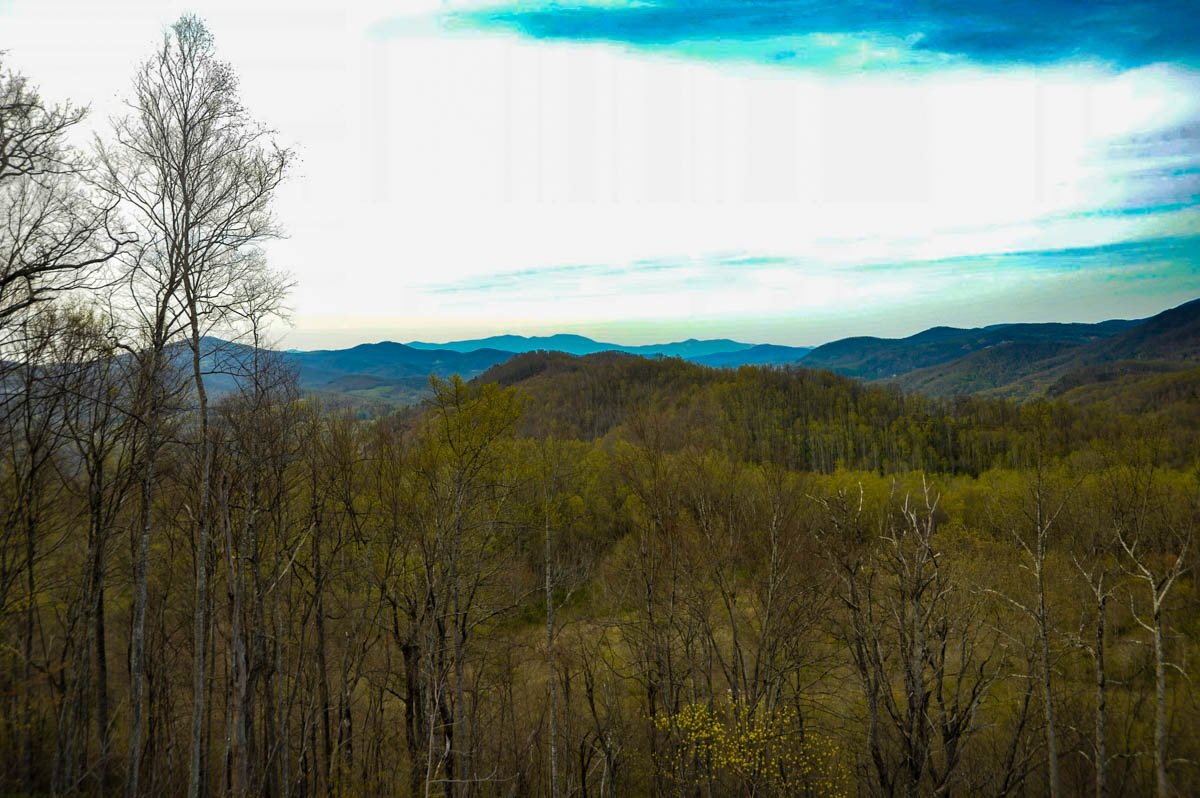
NC is stripping down for “Bare Season,” exposing scandalously beautiful mountain curves and secret vistas for adventurers craving uncluttered views and quiet trails.
Everywhere, NC
December, 2025
First, let’s clear up a crucial misunderstanding. We are welcoming you to Bare Season, not Bear Season. One involves panic, pepper spray, and playing dead; the other involves glorious vistas and crisp air. During Bare Season, the trees strip down to their skivvies to show off the mountain curves they’ve been hiding under leafy sweaters all summer. It’s not dangerous, but it is scandalously beautiful.
When the mercury drops, many hiking boots get stored away. But in North Carolina, the savvy adventurer knows this is precisely when the trails come alive with new possibilities. This is the state’s “bare season,” a magical time when the hardwood forests shed their leafy canopy, unveiling a hidden world of long-range views and intimate landscapes. With the foliage gone, the very bones of the mountains, valleys, and forests are revealed, offering hikers a perspective unseen the rest of the year.
This stark, beautiful clarity is the main draw. In the high-elevation Blue Ridge Mountains, a summer hike might reward you with a single, hard-won overlook. In winter, the entire trail becomes a vista. On iconic routes near Asheville, like the balds of Max Patch, or the rugged trails of Pisgah National Forest, leafless branches frame 360-degree panoramas that stretch for miles under a crisp, clear sky.
This “bare season” effect is powerful in the state’s foothills, too. At South Mountains State Park, the largest in the state, the leafless canopy uncovers the rugged terrain’s full scope. The park’s famous 80-foot High Shoals Falls is often more visible from a distance, its cascade framed by bare branches. The ridgetop trails, like the Chestnut Knob Overlook, feel even more expansive without their summer veil, offering clear views of the surrounding peaks and valleys.
The Piedmont’s unique geography also shines in winter. At Hanging Rock State Park, the trails climbing to its iconic quartzite peaks become view-corridors. The surrounding landscape of the ancient Sauratown Mountains reveals itself long before you reach the top. The final, panoramic view from the summit is even more striking, with crisp, clear sightlines across the uncluttered Piedmont. Further south, at Uwharrie National Forest, trails reveal the ancient, stony spine of the mountains, a sight normally obscured by dense greenery.
Even the coast offers a new dimension. At Cliffs of the Neuse State Park, the open sightlines provide a clearer view of the imposing 90-foot cliffs along the river. In the coastal forests of Carolina Beach State Park, the bright winter sun penetrates a canopy that is usually shaded, illuminating the unique ecosystems.
Beyond the views, winter hiking in North Carolina means trails free of crowds, humidity, and insects. It’s a season of quiet solitude, where the only sounds are your footsteps and the crisp air. So layer up, grab your trekking poles, and discover the Tar Heel State in its most revealing season. The views are waiting.


